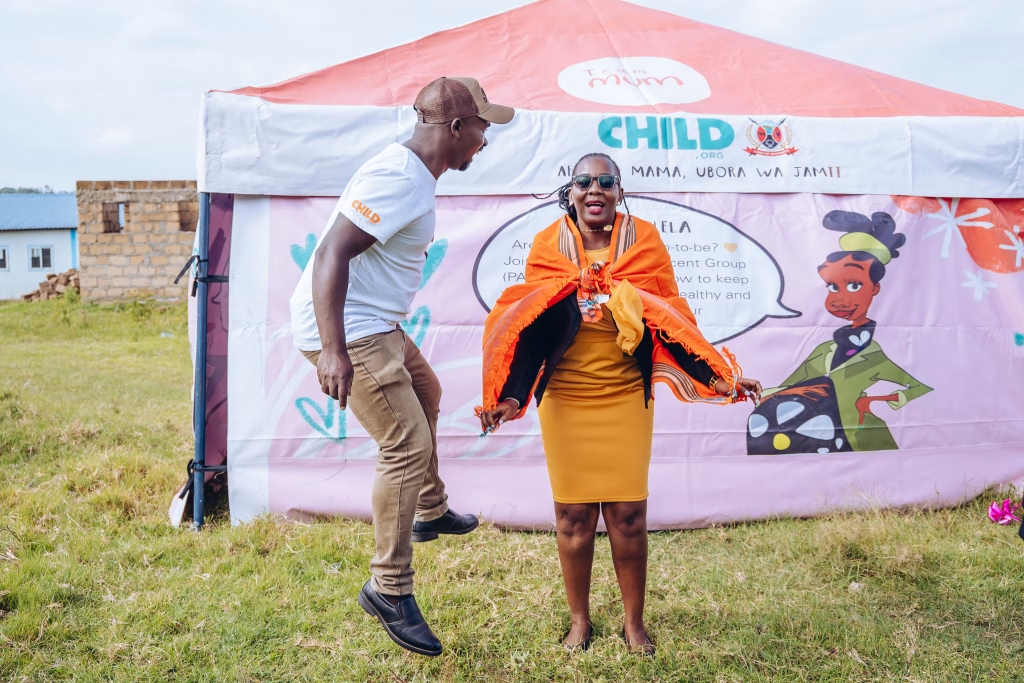
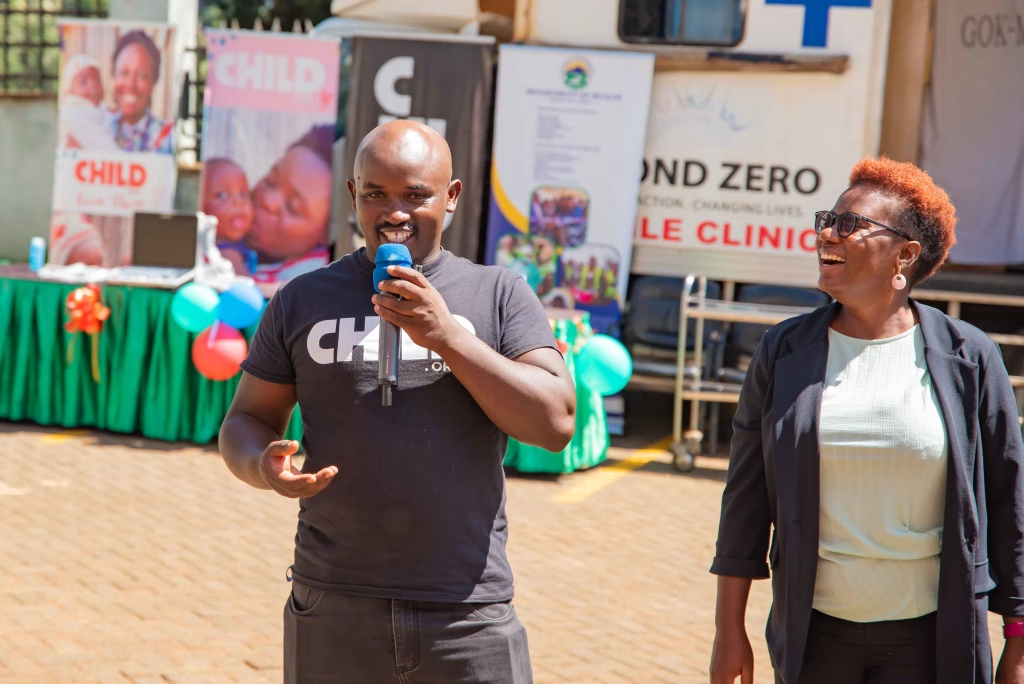
Behind Child.org’s #TeamDad is Jacob Chege, our Programmes Coordinator who is breaking social stigma and engaging men to build a community-led model for maternal and newborn health in Kenya.
Chege was just two weeks old when his mother collapsed into a month-long coma. She experienced unmanaged high blood pressure after giving birth, but under pressure to help on the family farm, she returned to heavy physical labour after only two weeks.
“I was never breastfed,” Chege says. “That has always saddened me, and I just wanted to understand what caused it, what led to it.”
That early experience shaped Chege’s entire trajectory. It inspired him to study Population Health and ultimately brought him to Child.org, where he has spent the last seven years working as a Programmes Coordinator. In a field where the focus is usually on women and their babies alone, Chege stands out as the driving force behind #TeamDad, Child.orgs community led approach to bring men into the maternal and newborn health conversations.
He realised early on that making pregnancy and birth safer for mothers and newborns also meant talking to men.
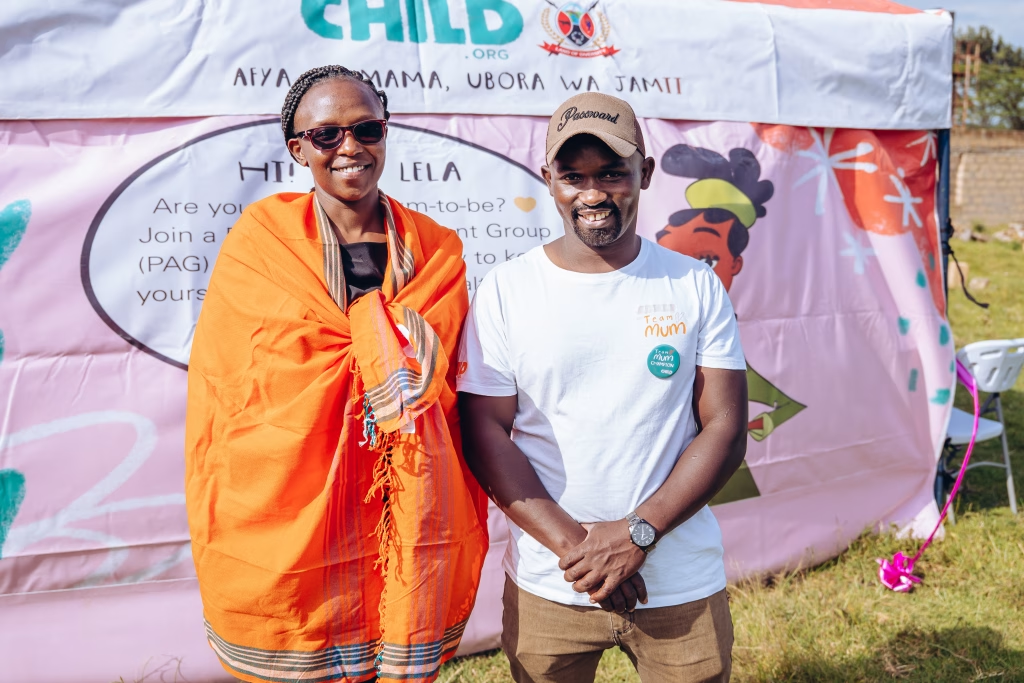
Breaking the Social Stigma
In many Kenyan communities, pregnancy and childbirth have long been viewed strictly as a woman’s domain. For a man to step into that world is to risk immediate social stigma.
“If a man gets involved, he is either labelled less of a man, or they say he is bewitched,” Chege explains. “Other times, they say that he is ‘sat on’, which, in Kenya, means that he is controlled by his wife.”
To avoid that social penalty, many men take a step back. Yet their absence creates a critical barrier, because men are often the ones controlling household finances, transport to clinics, and emergency savings.
Chege saw this contradiction clearly during Child.org’s early work in Meru. While the team was making strides alongside women in local Team Mum pregnancy support groups, health outcomes were still hitting a wall.
“We found that if we don’t bring men on board, we will just bombard women with information, but the practicality is not there,” Chege recalls. “In many of the communities we work with, the financial support comes from men. Without engaging them, there will always be a gap.”
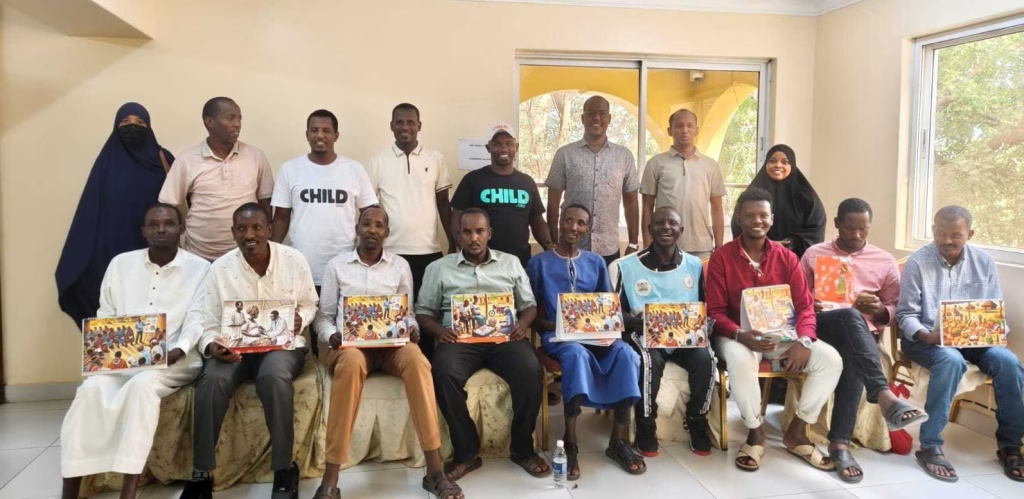
#TeamDad: Creating Safe Spaces for Constructive Dialogue
Driven by that realisation, Chege championed #TeamDad, a dedicated space for men to gather, learn, and unpack their roles as supportive partners and fathers.
Establishing these spaces required patience. To reach men who had never discussed reproductive health before, Chege built neutral environments where questions and traditional misconceptions could be explored openly and addressed constructively.
“You don’t show that you are shocked by their remarks,” Chege explains. “You absorb the remark first, then come to them in a humane way, understand their situation, and give them the positive message and lesson they need.”
This community-led approach allows #TeamDad to seamlessly complement Team Mum; Child.org’s support groups for pregnant women and adolescents. When women share challenges around birth planning in Team Mum pregnancy support groups, Chege brings those insights into #TeamDad to build awareness. When men express hesitation, that feedback helps inform discussions in the women’s groups. It creates a continuous loop of learning that grounds both partners in a shared mission: a healthy mother and a healthy baby.
How Local Champions Change the Narrative
The true impact of this work happens in the quiet yet transformative shifts happening inside individual households.
Chege recalls a participant named Richard Mithika, a man in his fifties from Meru who joined #TeamDad. In his community, seeing an older man walk alongside a pregnant partner or carry a newborn was almost unheard of. But as the #TeamDad sessions progressed, Richard’s perspective quietly shifted.
When his wife went into labour, he didn’t step back. Having set aside money through birth preparedness planning, he arranged transport to the health facility himself. There, he proudly held his newborn baby. Once back home, he began sharing daily household chores and taking an active role in his child’s care, even sharing a photograph of himself holding his baby with the rest of the group.
“That was so beautiful,” Chege says. “He became our champion.”
Today, former participants like him serve as community role models, stepping up at local #TeamDad dialogues to guide other men and normalise fatherhood involvement.
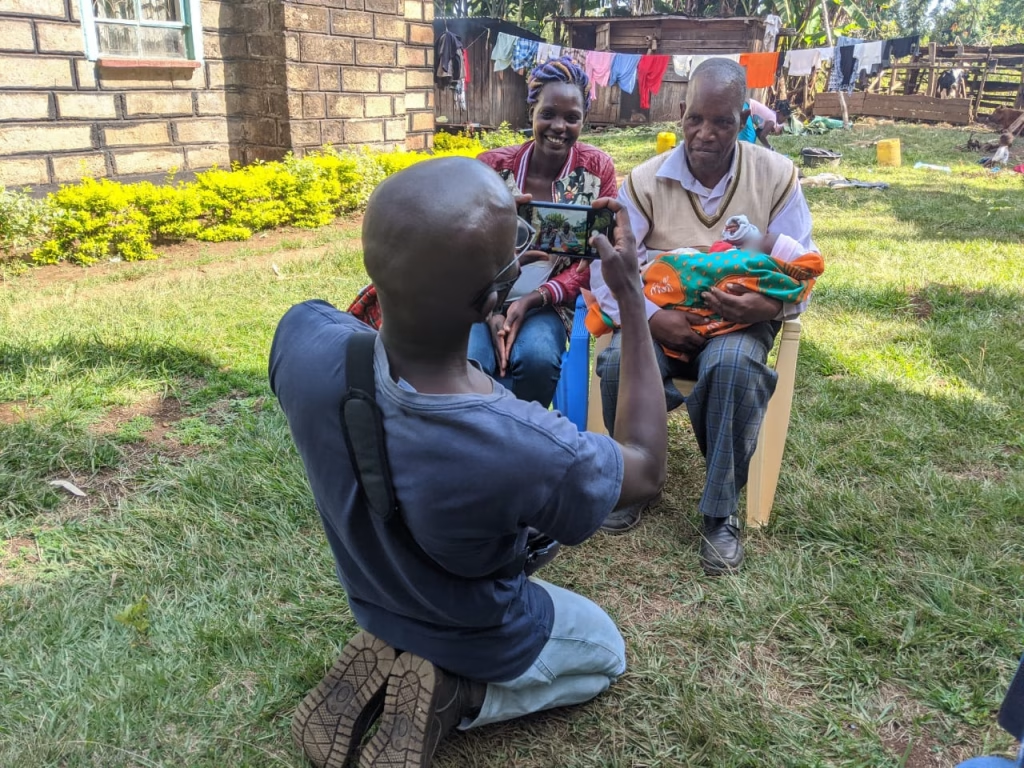
Leading by Listening
For Chege, bringing men into maternal health has always been rooted in deep humility and true collaboration.
“Being a man, I might not know everything women experience,” he reflects. “I can only learn by listening. My work has been simple: to create a supportive space, listen to what women go through, and amplify what I hear.”
By meeting communities where they are, Chege exemplifies the heart of Child.org’s approach: supporting local communities to build safer, more supportive health structures for mothers and their babies across Kenya.
As part of the Child.org team, Chege’s work on #TeamDad is a powerful example of how our staff work alongside local communities to pioneer practical, life-saving solutions in maternal and newborn health.
If you have any further questions about our #TeamDad project, please contact hello@child.org.