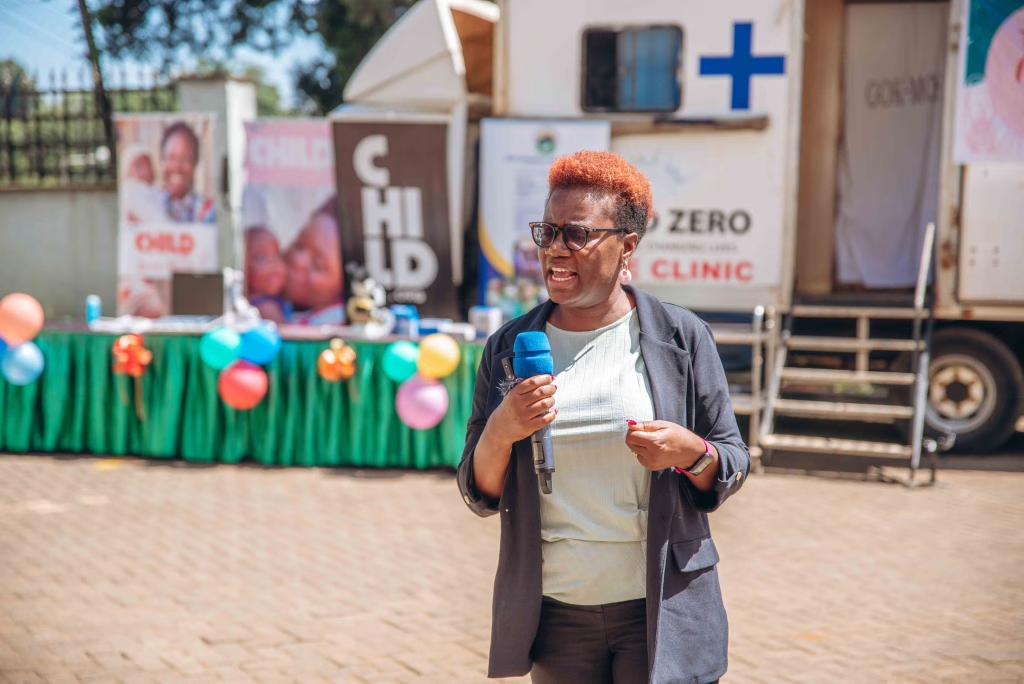
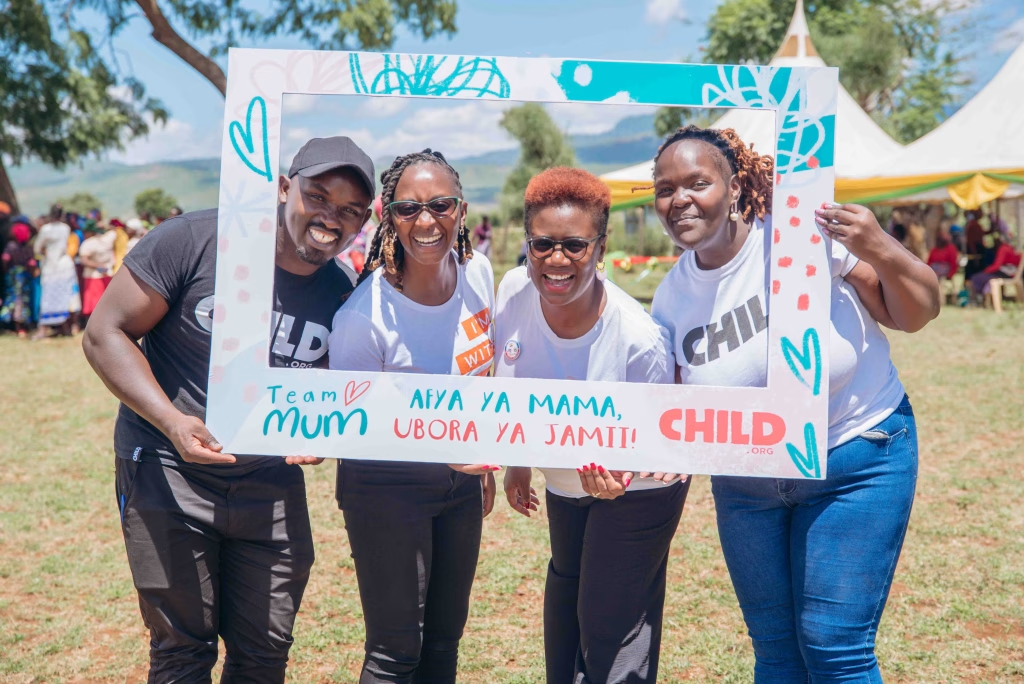
Child.org’s Head of Programmes, Cherio Onacha, abandoned conventional development playbooks to build a sustainable model for maternal health around Kenya’s trusted community networks.
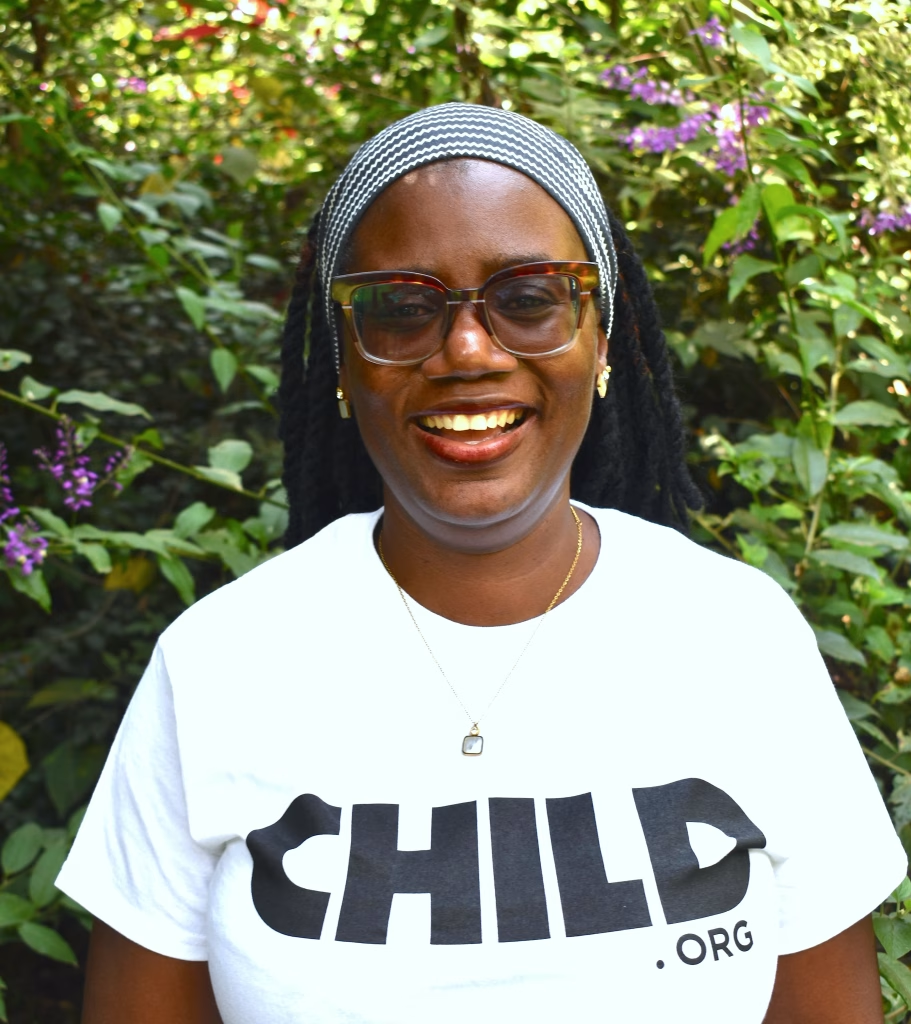
By the time Cherio Onacha arrived at Child.org, she had already moved through three other organisations in less than twelve months. To an outsider reviewing a curriculum vitae, such rapid movement might suggest a restless spirit or an inability to anchor. To Cherio, however, it was simply a matter of integrity. She refused to settle for institutional inertia.
Even as a child growing up in Kenya, she possessed a clear sense of direction. “From as far back as I can remember, I wanted to work in health,” she recalled. “I am very passionate about what I do, and I do not stop until I find the right fit.”
A refusal to settle
In her earlier career within international global health organisations, the fit had felt suffocatingly rigid. Those institutions operated on thick manuals and top-down mandates, leaving little room to question why a broken mechanism was allowed to remain broken. Child.org presented the opposite landscape. It was a young organisation without rigid templates, attempting to oversee a school health initiative in Kisumu entirely through external field partners.
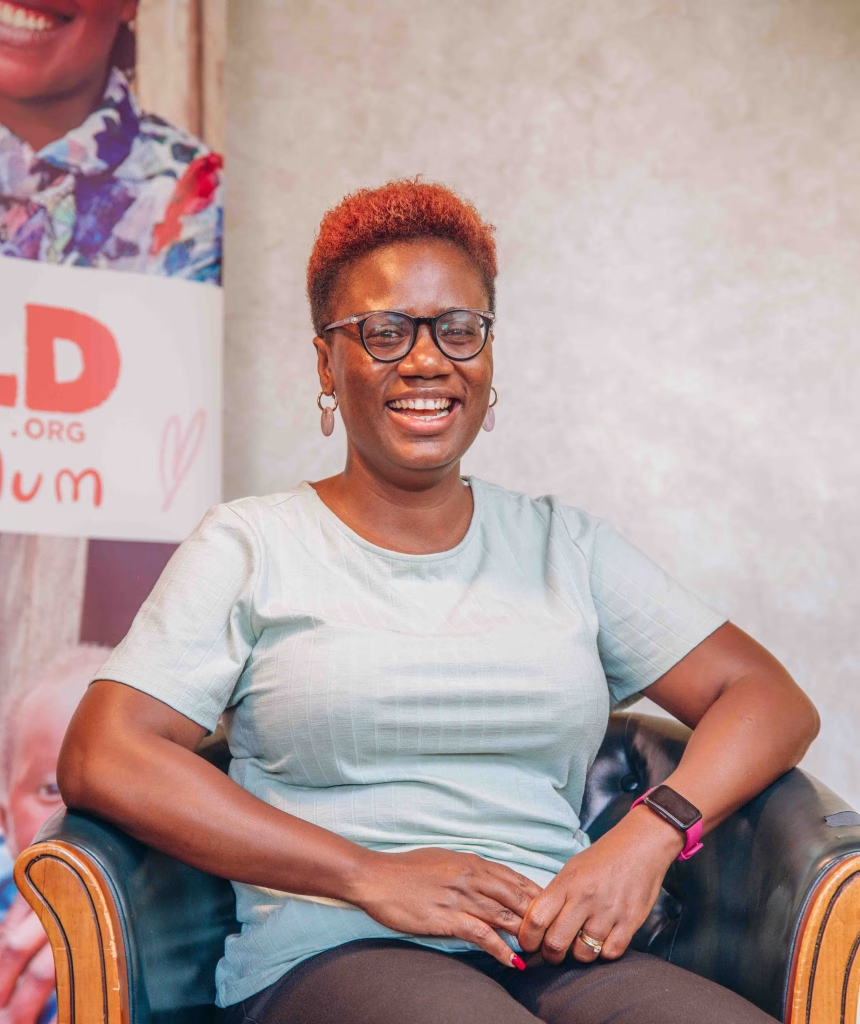
For Cherio, who admitted with a laugh that she simply loves a good challenge, the structural vulnerability was immediately clear: the organisation possessed high ambitions, but it lacked the internal muscle to direct and evaluate the very work it sponsored.
“We can’t work like this,” she recalled telling the team. Before contracting external partners to execute projects on the ground, the organisation needed the internal capacity to direct the work and add genuine value to it.
Beyond donor cycles
That insistence on internal competence transformed how the charity operated. It also defined its next major evolution, when Child.org shifted its focus to a persistent crisis in maternal health and public care: the plateauing rates of neonatal mortality in Kenya. While the country had made significant strides in reducing overall infant deaths, survival rates during the most fragile window, a baby’s first twenty-eight days, had stubbornly stalled, accounting for nearly half of all under-five mortalities.
The initial response had been straightforward. The team supplied new mothers with safe-sleeping baby boxes, using the essential goods inside as an incentive for women to deliver in clinics and return for crucial postnatal checkups within forty-eight hours. The numbers spiked, and by conventional metrics, the programme was a success.
Yet Cherio was uneasy. Free gifts depended entirely on external funding cycles. A local clinic, operating on a tight public budget, could never afford to hand out boxes once the donor money dried up.
“In the work that we do,” Cherio explained, “we are very passionate about working within an existing public system so that our impact is felt far beyond, not in a silo. We want to exit successfully and leave something behind.”
Trusting communal wisdom
The search for a truly sustainable model led the team to global research on maternal support groups, including studies from Nepal. But for Cherio and her team, the real breakthrough was not academic; it was visible on nearly any street in Kenya.
For generations, Kenyan women have gathered in chamas, informal community collectives where members pool small sums of money, manage local safety nets, and navigate life together. The financial aspect of a chama is vital, but its true strength lies in social solidarity.
“Women coming together to support one another has existed from time immemorial,” Cherio said. “It did not feel forced or foreign. I just knew it was going to work.”
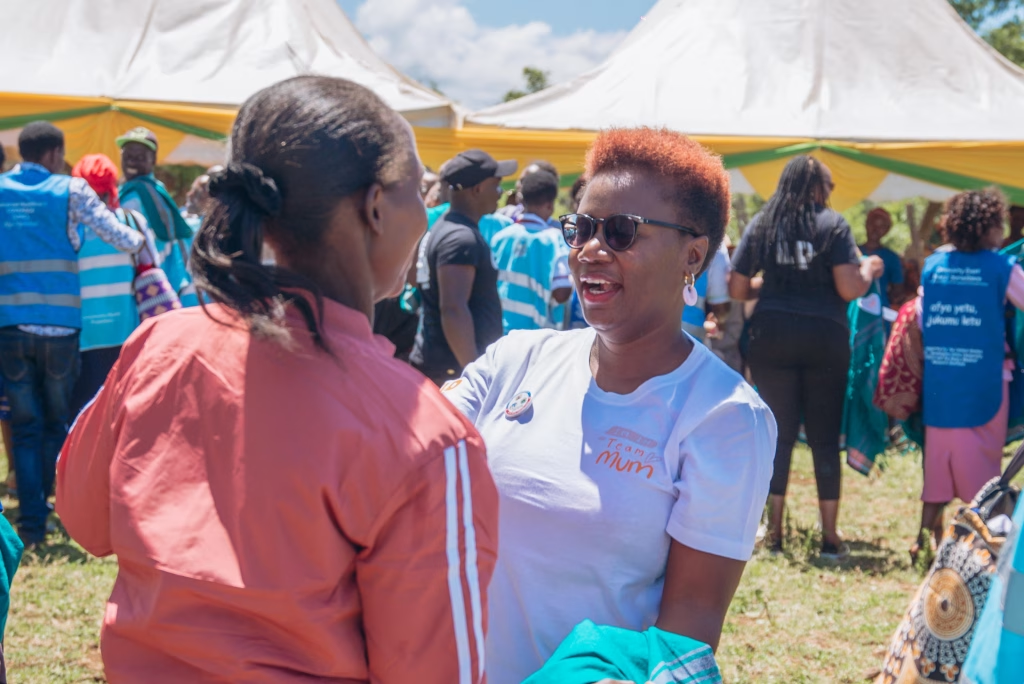
That observation became the blueprint for Team Mum, Child.org’s flagship programme. Rather than introducing an imported remedy, the organisation built upon an existing social architecture. Team Mum establishes peer-led support groups where pregnant women and new mothers gather to receive vital maternal and newborn health education, identify early danger signs, and navigate pregnancy alongside trained community health promoters. Alongside these groups, Child.org works directly with local health facilities to strengthen government antenatal and postnatal services. Today, these initiatives are deeply integrated into county health systems, designed to sustain themselves long after any individual project concludes.
A clarity of purpose
For Cherio, the work remains tied to a clarity of purpose she discovered as a student.
“My contribution to this world should be around alleviating human suffering,” she reflected. “I feel that is what I have been called to do.”
It is an unmistakable, formidable conviction, one that has reshaped an organisation’s approach to maternal and newborn health, proving that sustainable change begins not with grand external gestures, but with the discipline to listen to the people who were there all along.