
A country’s primary healthcare system and its economy are inseparable – and maternal nutrition sits right at that intersection.
When pregnant and breastfeeding women lack access to nutritious food and essential health services, the effects ripple far beyond the household. Poor maternal nutrition leads to higher rates of low birth weight, stunting, anaemia and developmental delays; all impact a child’s ability to learn, grow and contribute productively to society.
Strengthening maternal nutrition isn’t just about individual health; it’s about building a stronger, more resilient nation. Good nutrition is the foundation for human potential, especially during the critical windows of pregnancy, birth and early childhood.
This World Nutrition Day, we spotlight the often-overlooked link between maternal nutrition and newborn survival and development. In Kenya, malnutrition remains a leading contributor to poor maternal and child health outcomes and addressing it must be a collective priority.
Maternal nutrition in Kenya
Pregnant women, especially pregnant adolescent girls, face heightened nutritional vulnerability during pregnancy and breastfeeding. Inadequate diets, anaemia, poverty, food insecurity and poor access to essential health services all contribute to poor maternal nutrition which directly affects both maternal health and child development.
According to the 2022 Kenya Health Information System (KHIS):
- 18% of children under age 5 are stunted (too short for their age), indicating chronic undernutrition.
- 5% are wasted (too thin for their height), signaling acute malnutrition.
- 10% are underweight (too thin for their age).
- 3% are overweight, reflecting emerging issues of overnutrition in some segments of the society.
These statistics underscore the urgent need for targeted nutrition interventions and improved access to health services, especially for adolescent mothers and young children
Why maternal nutrition matters
When a pregnant woman is undernourished, the risks of complications such as low birth weight, anaemia, stillbirth and neonatal mortality increase significantly. Poor nutrition also impairs cognitive and physical development, affecting a child’s ability to thrive later in life.
Exclusive breastfeeding is one of the most cost-effective interventions for child survival and is tied to maternal nutrition. When mothers are well-nourished and supported, they’re better able to breastfeed exclusively for the recommended six months, strengthening the baby’s immunity and cognitive development while reducing healthcare costs and improving future productivity.
According to UNICEF Kenya, poor maternal nutrition and feeding practices, limited dietary diversity and low access to essential services continue to impact children’s growth and learning outcomes and, ultimately, the country’s productivity.
Global nutrition targets
Kenya is aligned with the World Health Organization global targets, which include:
- 40% reduction in stunting among children under 5
- 50% reduction in anaemia in women of reproductive age
- 30% reduction in low birth weight
- Increase exclusive breastfeeding in the first 6 months to at least 60%
- Reduce and maintain childhood overweight to less than 5%
- Reduce and maintain wasting in children to less than 5%
These are not just numbers, they are calls to action.
What we’re doing at Child.org
At Child.org, we integrate nutrition into our maternal and adolescent health work in Kenyan communities like Meru, Narok and soon Garissa. We do this through:
- Training Community Health Promoters (CHPs) to deliver nutrition education in Pregnant Women’s Groups and Pregnant Adolescent Groups.
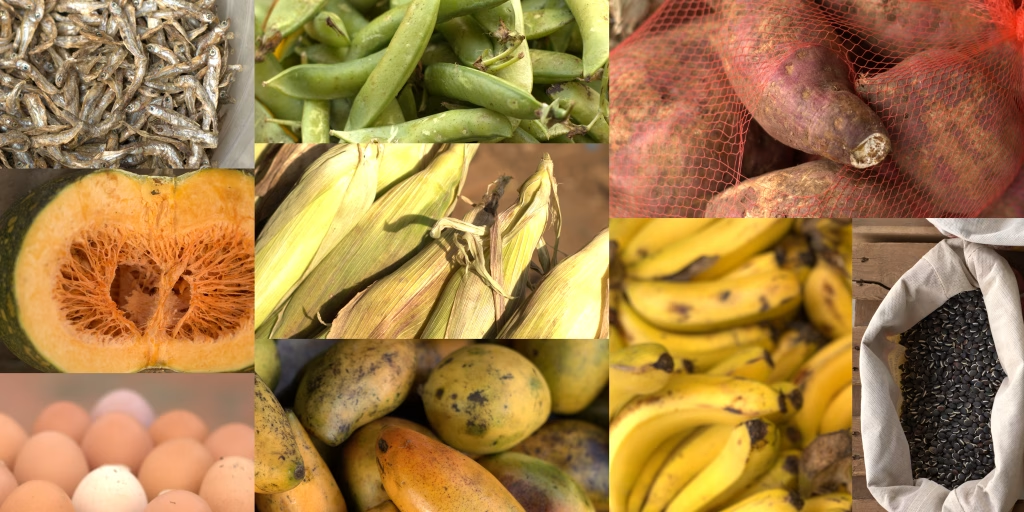
- Encouraging locally available, nutrient-dense foods, and discussing common myths around diet during pregnancy. One example of misinformation we’ve seen is that pregnant women should eat less to prevent “big babies” which cause tears during childbirth.
- Advocating for facility-based care where pregnant women can access supplements and antenatal nutrition counselling.
Tackling malnutrition in women and children requires a multisectoral approach in strengthening nutrition-sensitive health systems ; improving food access and education ; and scaling up community-level nutrition interventions.
This World Nutrition Day should be a reminder that nourishing mothers is the first step to nurturing a stronger, healthier generation.
You can support Child.org by donating monthly: £3, £5, £10 a month – every limit really can have a life-changing impact.