
Climate change is not a distant threat – it’s here, shaping the lives of women and children every day. Across Kenya, rising temperatures, prolonged droughts and unpredictable rainfall are doing more than transforming landscapes. They are also transforming health outcomes.
At Child.org, we see the impact of climate change most through the lens of maternal and newborn health.
The heat on mothers and babies
Extreme heat and environmental stress are endangering pregnancies. Research shows that high temperatures increase pregnancy and birth risks. These include: preterm births, low birth weight, dehydration and hypertensive disorders such as pre-eclampsia.
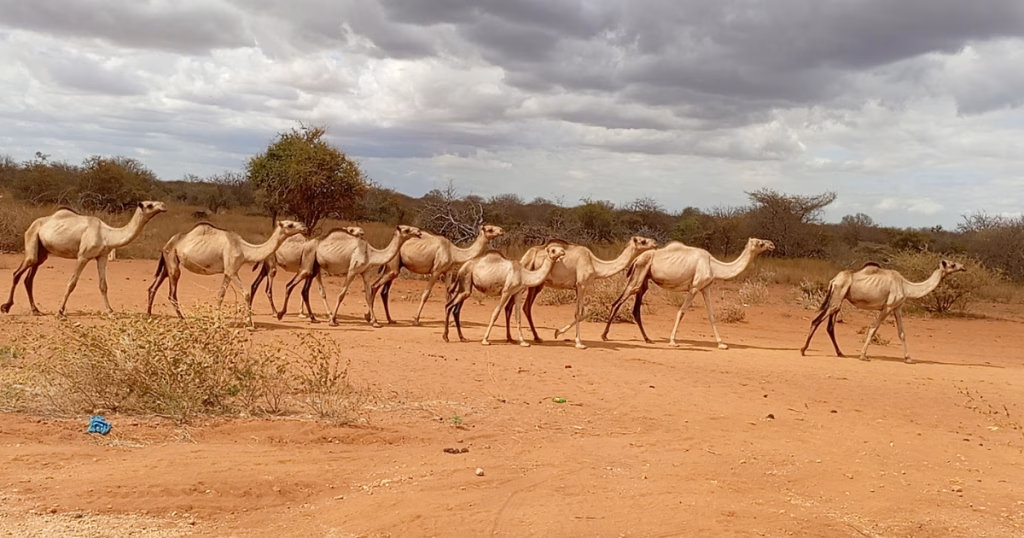
In regions like Garissa in Kenya – where Child.org works – the average temperature hovers around 36°C, peaking at 38°C. Mothers often walk long distances for care under the intense heat. As a result, those who are pregnant or breastfeeding face even greater strain. This can lead to complications long before they reach a health facility.
Health workers also face serious challenges. Rising temperatures and resource scarcity make it harder to deliver quality care. Moreover, facilities without proper cooling systems or reliable power struggle to maintain safe environments for mothers and newborns.
When climate change fuels the three delays in maternal health
Climate stress worsens the three delays that contribute to maternal mortality:
- Delay in deciding to seek car: Families dealing with food insecurity or displacement may prioritise survival over healthcare.
- Delay in reaching care: Floods can make roads impassable, while extreme heat makes long walks to facilities dangerous.
- Delay in receiving care: Overstretched facilities may not have the staff or equipment to manage heat-related complications.
These challenges create a cycle where climate change deepens existing inequities. Access to care becomes even harder for those most vulnerable.
Building resilience at the community level
At Child.org, we believe that solutions must begin within communities. Therefore, we work with county health teams to help communities build resilience – not only to health risks but also to climate pressures.
Our Pregnant Women’s Groups improve health literacy and promote better nutrition. The mobile outreach clinics we help run bring care closer to those who need it most. Together, these interventions ensure that even as the climate changes, women and babies are not left behind.
We also collaborate with county health teams to strengthen the systems mothers rely on. This includes improved facility readiness to ensure timely referrals, and supporting seamless care throughout the Maternal and Child Health Care phase.
As Dr Maria Neira, WHO Director, Department of Environment, Climate Change and Health, explains:
“Health and care workers play a key role in addressing climate change as a health crisis. Their unique position enables them to raise awareness, advocate for policy changes and empower communities to mitigate and adapt to climate change. By engaging in dialogue and action, health and care workers can catalyse efforts to safeguard human health as well as ensuring a resilient and sustainable future for all.”
The future of maternal health in the face of climate change
The future of maternal and newborn health depends on how well we adapt our systems today. We must:
- Train health workers to recognize and respond to climate-related complications,
- Design outreach models that bring services closer to remote areas,
- Invest in data-driven approaches to monitor changing risks, and
- Advocate for climate-sensitive health planning at all levels of government.
Ultimately, climate change is not only an environmental issue. It is also a maternal health issue, a child survival issue and a justice issue.
This is why Child.org continues to stand alongside communities – listening, adapting and innovating – to ensure that no mother is left behind, no matter how high the temperature rises.
This winter, our Big Give Christmas Challenge aims to raise £45,000 to launch Team Dad in Garissa, and further support women and babies. Between the 2nd and 9th of December 2025, every donation you give will be doubled. Join our mailing list to receive a reminder email when the campaign goes live.
Cover image: showcases three pregnant women walking in Garissa County. Shot by Taji Creatives.